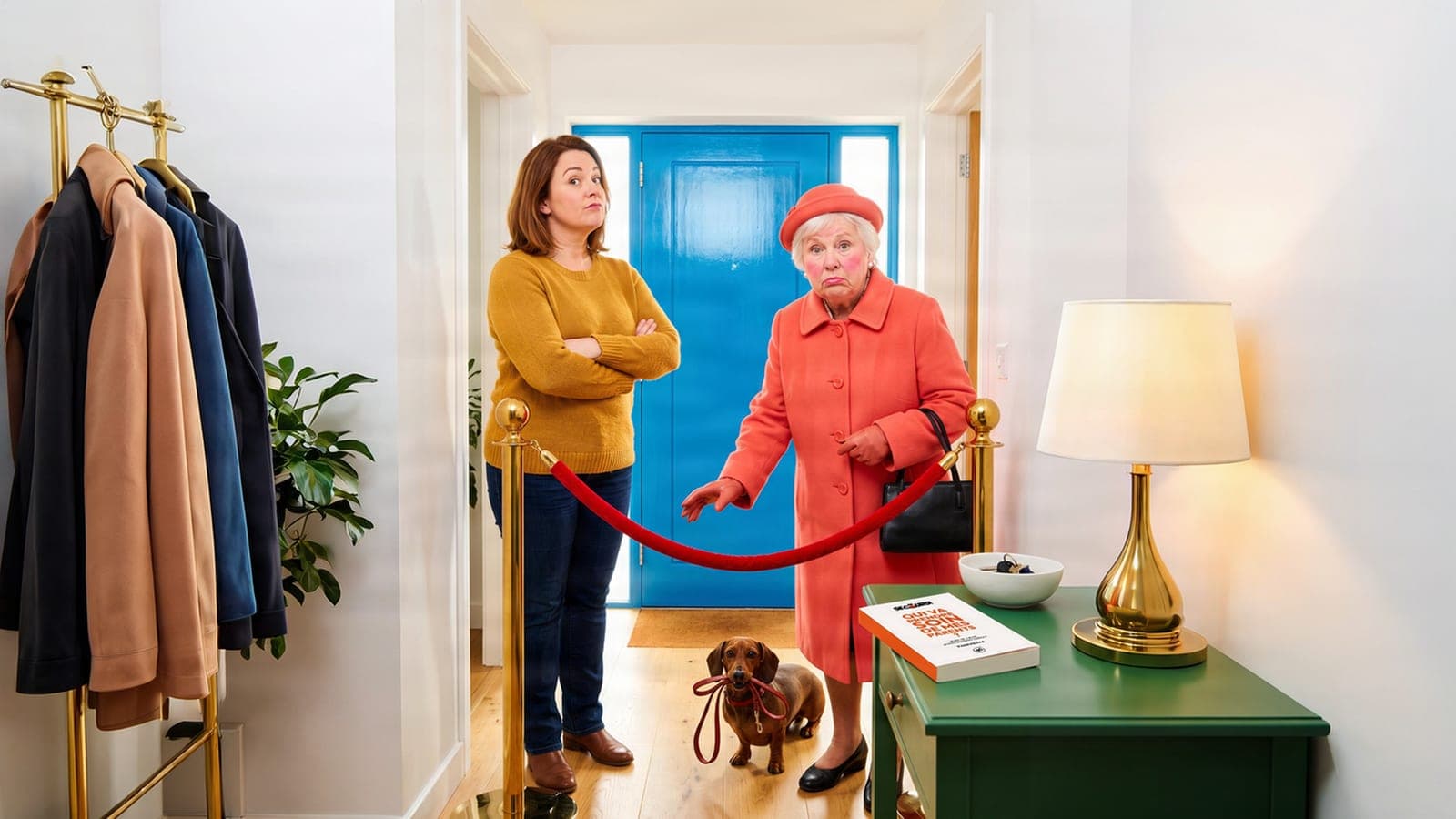
Your mother may be angry because she refuses to have her life controlled, even for her own good. You can understand her point of view without agreeing with her: from there, the situation can calm down.

Question 1
Here is what Claire confided to me recently: “ am angry with my mother. She says bad things about me in front of me, she says bad things about my sisters, she does not stay home as we asked her to... I am angry all the time, and then I have to act as if everything is fine. How do you do it?”
There is another way of seeing things. Your mother is angry because, perhaps, she refuses to have her life controlled. Even when it is in her interest: to avoid a fall, to avoid her getting lost.
You surely have good reasons and coherent arguments. But if you put yourself in her place, you can understand the situation without agreeing with her.
Question 2
By looking at the request from where she stands. You ask her not to go out, for her own good. There is every reason to be very angry when it is your own children asking you.
If your boss asked you to work at night, for the good of the company, would you find that normal? Of course not. Yet, from his point of view, the reason could be justified. And you, even if you understand, you do not agree.
It is not about doing what your mother wants. She feels oppressed: from where she stands, she has the right to be angry and to criticize.
You do not have to change your mind. You only have to accept that hers is different. From there, the situation can calm down.
One simple idea can guide your actions: act with your mother as you would want a health professional you do not know to treat you, if you were under their care.
It takes effort: setting aside, for a few moments, your own perception of the situation, to welcome, perhaps, a new point of view.
Question 3
Because with a parent, authority no longer works. The common mistake is to want your parent to obey like a child, and do what you have decided for them, for their good.
With a child, authority may be enough: they lack experience. Your mother, for her part, has a whole lifetime behind her, and she is the one who taught you to walk.
When a parent becomes vulnerable, even with the greatest kindness, we tend to want to reason with them, to say “no” to them and explain the situation, as to a child. Going against their will can then create resistance.
The more you insist, the more she resists. And the more she resists, the more your anger rises: each stays in their role, and no one gets out.
Question 4
Yes. Accepting that your parent runs their life also means accepting that they make their own mistakes. If your mother decides to go out and she falls, it is her responsibility, not yours.
Your parent is responsible for their situation, you are their protector. They always keep the right to accept or refuse what you suggest.
Not treating them like a child is precisely this: respecting their choices, even when you know they do not improve their condition.
Respecting their choices, even when they seem irrational to you, without saying “I told you so”, preserves their sense of freedom and control. A decision made in the heat of emotion, rather than from reason, may even be more beneficial to them, in keeping their balance.
The most important thing may be to grant everyone the right to make mistakes, and to change their decisions.
In case of danger, you can ask her doctor to tell your mother what she can still do, and what she can no longer do.
Question 5
Often, a fear. Look at what your anger hides. Sometimes, behind “ got angry”, the real words would be: “ was terribly afraid you would hurt yourself.”
Your anger does not make you a bad person. We are emotional beings: a human being with no capacity for anger would be an automaton.
Being aware of it means choosing to no longer be its slave. When you recognize anger the moment it arises, and you take responsibility for your emotions, you contribute to peace.
Saying “anger” is easier than saying “fear”. Yet it is the fear that your mother needs to hear: it does not give her an order, it tells her that you care about her.
When you understand where your anger comes from, you look to support your parent in doing things differently, rather than to forbid them from doing it.
Rather than asking her to stop doing one thing, you help her to do it differently. That is where the help truly changes.
Question 6
What this does not do: understanding her point of view does not erase the risk, or your fear. Your mother may still go out when you have asked her to stay home. This change of outlook does not make her obey: it saves you from living in anger, and from putting on an act.
The most concrete step, starting today: the next time anger rises, look for the fear it hides, and say it with the real words. Then ask yourself what you could do with her, rather than what you are going to forbid her.
This is a subject I cover in my book 👉 Help! Who's Going to Take Care of My Parents?. Your parent always keeps the right to accept or refuse what you suggest. They may refuse all your suggestions: keep suggesting them, as long as you have the strength.
Now, with all of that, it is up to you to find the middle ground.
This guide can be useful to your brothers and sisters, who may be asking your mother the same thing: you can pass it on to them.
Would you like to know how to find this middle ground with your parent? Let me know: 👉 contact@help-editions.ca
Sources used (6)