Before you try to take their phone away, understand two things: what a screen addiction is, and what your parent is trying to escape. The screen may be filling an emptiness: boredom, the fear of being alone, thoughts they would rather not hear.

Question 1
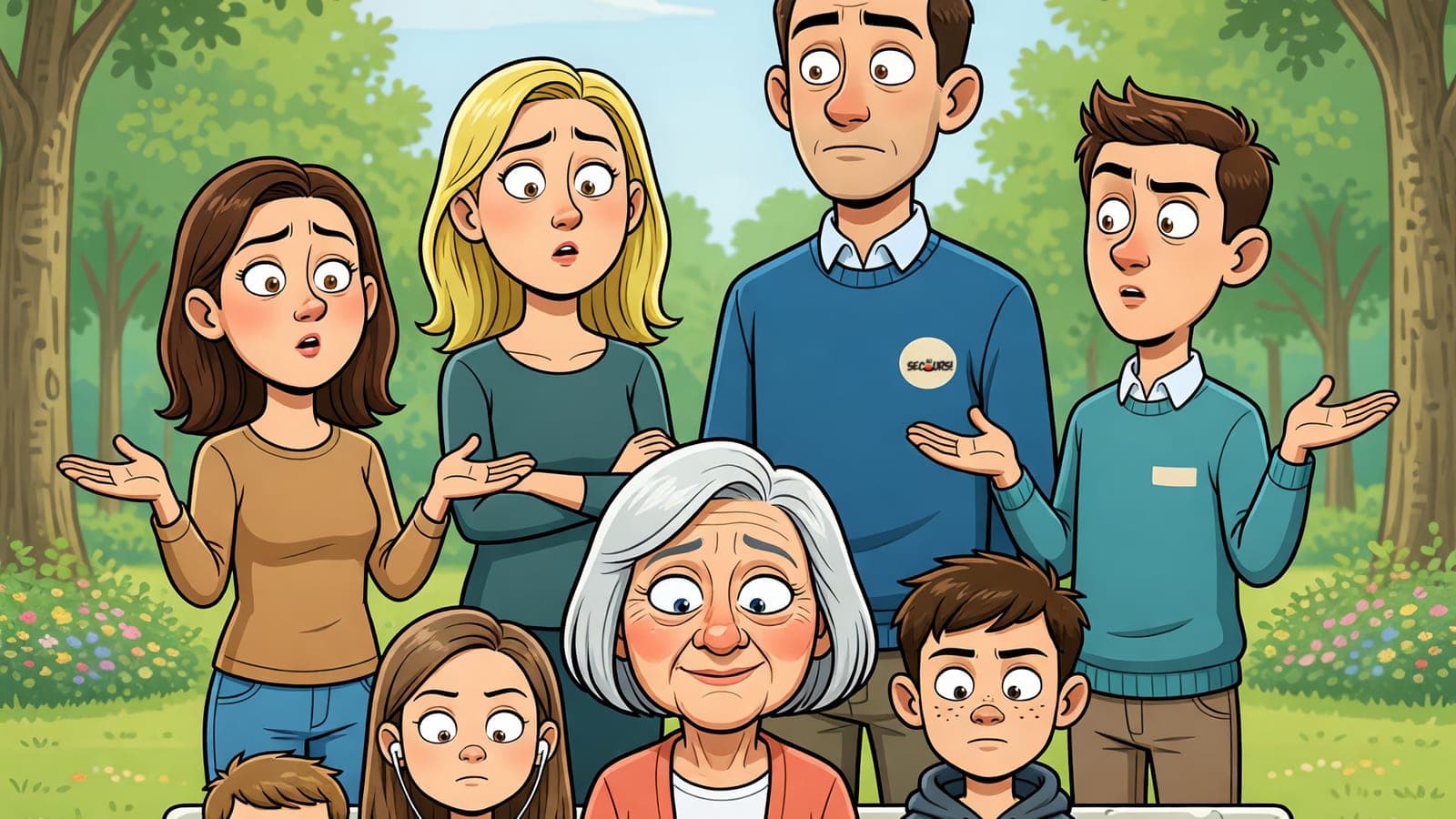
“We can't even have a conversation with my mother anymore.” She is 68, and she scrolls through her reels and her TikTok videos without stopping.
To make yourself heard, you almost have to shout over her phone. And she complains that nobody ever talks to her, yet every time someone comes to see her for a chat, her eyes are on her screen.
You are there, for her. You have things to tell her, and the screen wins.
So a thought sets in: she prefers her phone to us. We would simply like to matter more than a video.
What you are going through is painful, and you have the right to be fed up. I am not saying that your parent is right to stop listening to you.
Question 2
To handle the situation better, you need to understand two things: what a screen addiction is, and what your parent is trying to escape.
If your parent had started drinking, you would try to help them stop. But if they had started drinking to forget, to escape something, they would have two problems to solve: the addiction, and what caused it. With the phone, it has most likely become the same thing.
If my parent were in this situation, I would try to learn about addictions, like the ones some teenagers experience with video games and screens.
The goal would not be to judge, but to understand, setting aside my preconceptions and my judgments.
I would discover that these apps are designed so that you do not put them down: the next video starts by itself, and there is never an end.
It may not be that your parent prefers their phone to you. They may be caught in something that is built to hold them.
Question 3
Next, I would try to see what they are escaping, what scares them: boredom, the fear of being alone, anger, the toxic thoughts that come back uninvited…
Ask yourself the question, for yourself: what would you do with a whole day without a phone, without a screen, without music, without anyone to talk to? What would the little voice in your head say?
We all fill our days: work, obligations, conversations, our favorite series. Your parent may be filling an emptiness with their videos.
They may have a visitor every day. But should their life revolve around those twenty minutes of conversation?
Boredom may be only a revealer of what they are missing, of what they do not have, or of what they have lost.
And loneliness feeds on itself: the longer you stay alone, the more you shut yourself in, even when you suffer from it.
Also read: 👉 Why try to change your parent when you're the one who's hurting?
Question 4
I would also learn to let go of control, and perhaps to stop wanting my parent to be the way I would have liked them to be.
I would learn the stages of grief, to better understand what I am going through.
Letting go does not mean abandoning your parent. It means accepting that the image you had of them no longer matches the one of today, and welcoming them as they are.
If it is so hard, it is because of attachment: the stronger it is, the greater the pain. It is not a weakness, it is human.
Question 5
When the situation becomes urgent, the best trick is for the recommendation to come from an authority they respect.
Their doctor, for example, with whom you will have had a conversation beforehand. The doctor will be the one to recommend, for example, not going over two or three hours a day.
Keep one limit in mind: the more you rely on an authority, the more your parent may feel that their voice no longer counts.
Because one question remains: is it not selfish to want them to get back a life that perhaps no longer appeals to them?
Your parent is an adult. They have the right to refuse your suggestions, even when you think they would do them good. Forcing them “for their own good” would be treating them like a child.
Also read: 👉 Your parent refuses to change: why does it make you suffer so much?
What this does not do: neither their doctor nor the gestures that follow will make them put down their phone for you. They remain free to choose.
Boredom, emptiness, letting go: these are subjects I address in the book 👉 Help! Who's Going to Take Care of My Parents?.
Question 6
When a parent says they feel lonely, are they talking about what they see around them, or about what they feel deep inside?
Their complaint may not be about your visits. And telling them again that you love them is not enough: if boredom has set in, words will change nothing.
Three gestures can help, starting from your next moment with them:
- Listen to them for real when they complain. Without answering “but we're here!”, without looking for a solution right away: take the time to understand what they feel.
- If they agree, take them out for a treat: an ice cream, a pastry, the kind their doctor would advise against. A real pleasure, shared with you, so that they reconnect. Skip the walk if it is not their thing.
- If they refuse to go out, invite one of their friends over, or some friends of yours, for a coffee.
Also read: 👉 Helping an Aging Parent: What If You Gave Them a Place Instead?
The small change lies there: stop seeing their phone as a rival, and look for what it fills.
What your parent gains from it: they are neither judged nor forced. Their boredom or their loneliness is heard, and they keep the right to choose.
This guide may speak to a brother, a sister, your spouse, who are going through the same moments. You can pass it on to them.
And you, what do you think: is wanting them to put down their phone for their sake, or for ours? Let me know: 👉 contact@help-editions.ca
Sources used (6)
| # |
Fact cited |
Link |
| 1 |
Apps are designed to hold attention: report of the expert commission on the impact of young people's exposure to screens, “Children and Screens. In Search of Lost Time”, “attention-capture strategies” |
👉 Enfants et écrans. À la recherche du temps perdu |
| 2 |
The emptiness, a day without a phone or a screen, the little voice in the head; boredom, a revealer of what we are missing; if boredom has set in, words will change nothing; being listened to for real: the book, “Giving Meaning Back” |
👉 Help! Who's Going to Take Care of My Parents? |
| 3 |
Letting go, accepting that the image we had of our parent no longer matches the one of today: the book, “Accepting That Your Parent Is Wasting Away” |
👉 Help! Who's Going to Take Care of My Parents? |
| 4 |
A medical expert as a third party, and the risk of relying on them too quickly: the parent feels that their voice no longer counts: the book, “Endless Conflicts” |
👉 Help! Who's Going to Take Care of My Parents? |
| 5 |
The parent is an adult, who has the right to refuse our suggestions; forcing them “for their own good” is treating them like a child: the book, “My Parent and Technology” |
👉 Help! Who's Going to Take Care of My Parents? |
| 6 |
When a parent says they feel lonely, are they talking about what they see around them, or about what they feel deep inside? : the book, final quotation no. 42 |
👉 Help! Who's Going to Take Care of My Parents? |