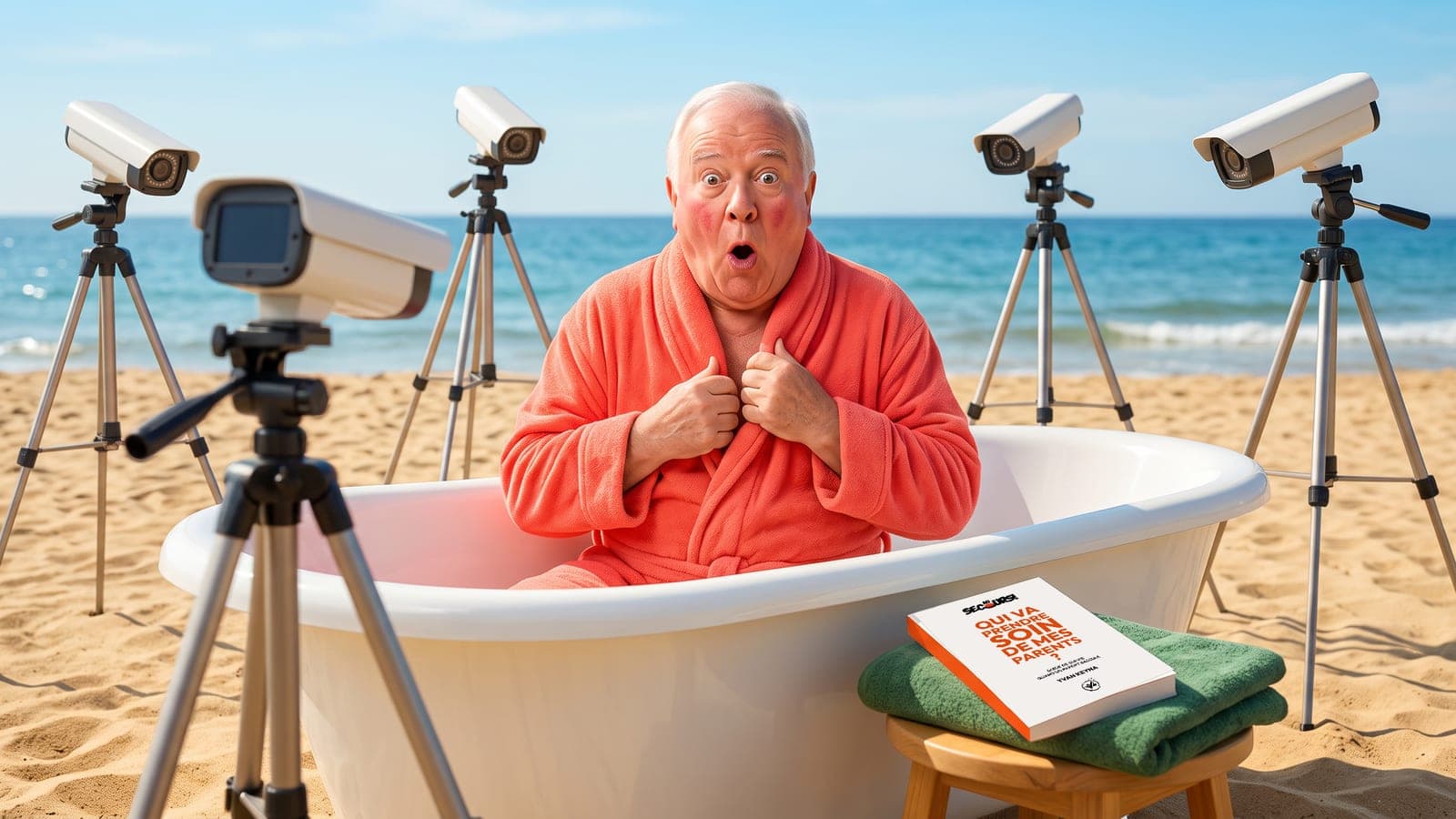
To be alerted if your parent falls, a camera is not the only way, nor the best. A call button, a watch that detects a fall, motion detectors: they send an alert without filming them.

Question 1
You want to be alerted if they fall, even when you are not there. On a forum, someone asked the question about his parents, who may be moving into a residence: “Are there ways to monitor the risk of falling, especially in the bathroom?”
He is also thinking of those who live alone at home. And the bathroom comes up three times in his message: he asks what its risks are, and whether other parents have already fallen there.
Finally, he asks how to keep track of his parents' health once they have settled into a residence. This guide sticks to falls: being alerted if they fall.
You cannot be there every moment. And it is precisely when no one is there that you are afraid your parent will fall. You would simply like to know they are all right.
You have the right to be afraid, and to want to be reassured. Here are three ideas, drawn from the answers to his question.
Question 2
The call button is worn at all times: a pendant around the neck, a watch, a bracelet, or special glasses. Day and night, it connects your parent to an operator. This service is called telecare.
If your parent presses it, the operator calls them straight away, to find out what is happening. If it is not urgent, the operator alerts someone on their list. If there is no answer, or if it is urgent, the operator sends emergency services.
This list includes people who can get to their home quickly.
Some of these devices are waterproof: they can also be worn in the shower.
The same center can also be alerted without anyone pressing anything: by a fall detector, or by motion detectors installed in the home.
Question 3
A watch that detects a fall sends an alert without your parent having to press a button. When its sensors detect the fall, the signal goes out on its own.
Some go further. If your parent does not move for about a minute, they call emergency services. Then they send your parent's location to their emergency contacts.
If it is the bathroom that worries you, choose a waterproof watch, designed for the shower. Not every model is: check this before you buy one.
A water-resistant watch cannot necessarily go in the shower: some manufacturers advise against soapy water.
Question 4
Because filming your parent “for their own good” would be like them filming you for your own good. Or like your boss being able to access the cameras in your home, to make sure you will not be late for work.
What you would refuse for yourself, your parent has the right to refuse too.
You may have thought about it: being able to see them at any time, with a glance at your phone, and feel reassured. The idea is interesting if it is about one specific space in the home, where your parent can talk with you by video call: in front of the TV, in the kitchen, for example.
There, the camera is for talking to each other. Not for monitoring them.
Question 5
There are other ways to check they are all right, such as smart motion detectors. They can track the room your parent is in, and their position: sitting, standing or lying down. And this, with no video recording.
For some, a single sensor is enough, placed in the center of the home. Others work by radar: they spot a fall without capturing any image, which protects your parent's privacy.
They are installed in the house, not on your parent: there is nothing for them to wear. If there is no longer any activity, an alert goes to a call center, as with the button.
And if you want to see them, keep the camera for the corner where they talk to you by video call.
Question 6
The one that alerts you without filming them. The three differ in what your parent has to do:
- The call button: they wear it, they press it, an operator answers day and night.
- The watch: they wear it, it sends the alert on its own, and depending on the model it can go in the shower.
- Motion detectors: nothing to wear, no image, an alert if there is no longer any activity.
What this does not do: none of these devices stops your parent from falling.
The most concrete gesture, before installing a camera: ask yourself the question, would you, yourself, accept them filming you? Then choose a device that sends the alert without filming them, and check that it is waterproof if it is the bathroom that worries you.
The small change lies there: stop believing that a camera protects them.
What you can gain from it: being alerted if they fall, even when you are not there.
What your parent gains: help if they fall, their privacy, and a corner to see their loved ones by video call.
This guide can be useful to the whole family, to choose together. You can pass it on to them.
Would you like to know more about smart motion detectors? Let me know: 👉 contact@help-editions.ca
Sources used (8)
| # |
Fact cited |
Link |
| 1 |
The call button is worn on the person, as a pendant around the neck, a watch, a bracelet or special glasses; it puts you in touch with an operator 24 hours a day, 7 days a week |
👉 Telecare, information from the CNSA on Santé.fr |
| 2 |
When the button is pressed, the operator calls straight away; if it is not urgent, the operator alerts someone on the list; if there is no answer or in an emergency, the operator calls out emergency services |
👉 Telecare, information from the CNSA on Santé.fr |
| 3 |
The list brings together people who can get to the home quickly |
👉 Telecare, information from the CNSA on Santé.fr |
| 4 |
Some devices are waterproof and can be worn in the shower |
👉 Telecare, information from the CNSA on Santé.fr |
| 5 |
A fall detector sends the alert on its own, without anyone pressing a button |
👉 Telecare, information from the CNSA on Santé.fr |
| 6 |
Motion detectors installed in the home send an alert when there is no longer any activity |
👉 Telecare, information from the CNSA on Santé.fr |
| 7 |
A single radio-wave sensor, placed in the center of the home, identifies the room the person is in and their position: sitting, standing or lying down |
👉 RTBF, with AFP |
| 8 |
A radar detects falls at home without capturing any image and without a worn sensor, which protects privacy |
👉 Mitacs, radar detection of human movement |